

Data engineering services: when better reporting needs a better data foundation
A buyer's guide to telling a reporting problem from a data foundation problem: the signs, what a reliable foundation includes, when to build or rebuild, and what to ask before you hire.
 Articles
On this page8 sections
- Five signs your reporting problem is a data foundation problem
- Data engineering, analytics engineering, and BI are not the same job
- What a reliable data foundation actually includes
- What to define before you hire
- Build, reorganize, or replace: how to decide
- Red flags when hiring a data engineering partner
- Questions to ask before you start
- Fix the foundation, not just the view
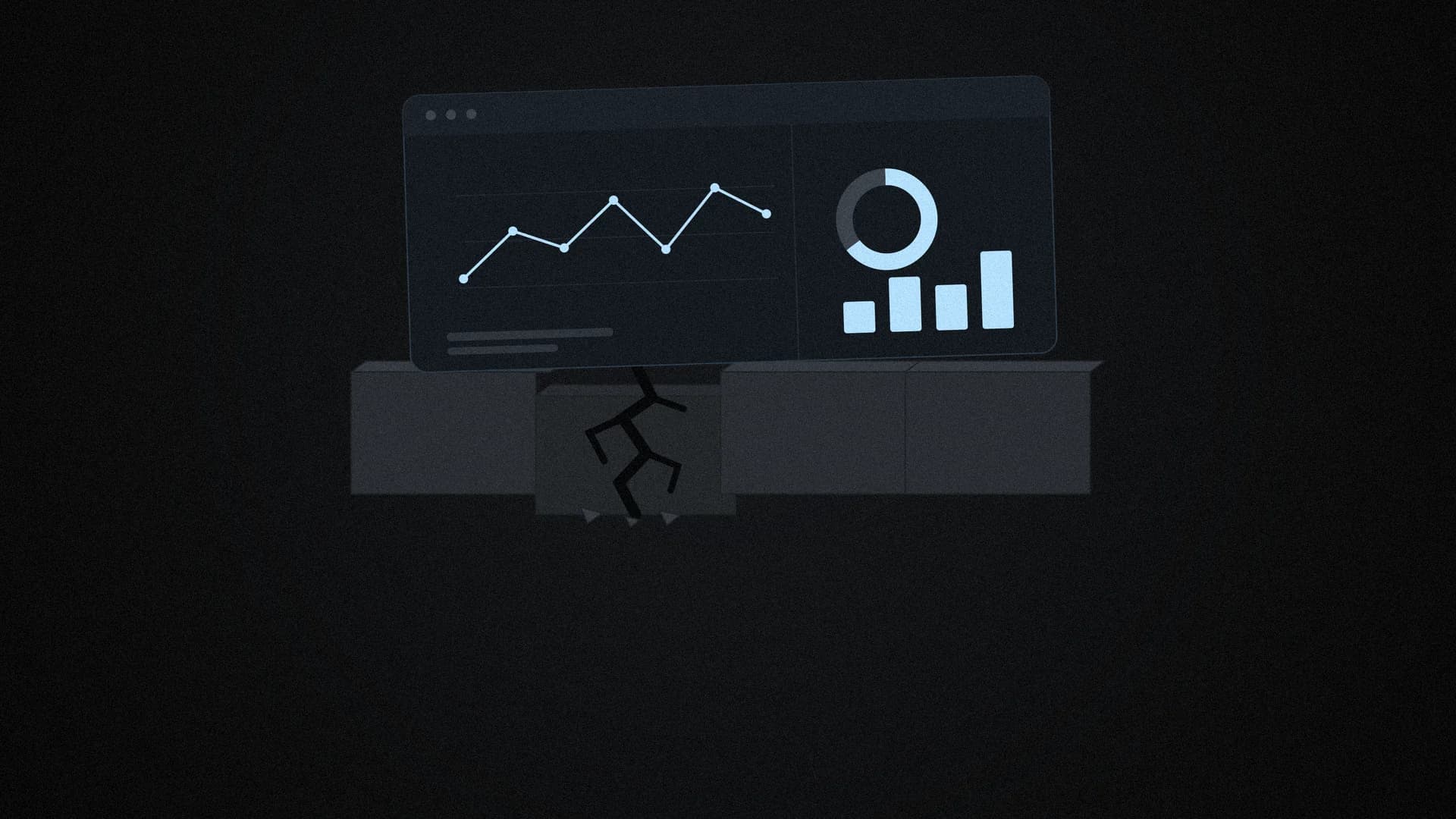
Data engineering services design and build the systems that move, store, and standardize your data so that reporting and analysis can actually rely on it. In practice that means auditing where data comes from, building the pipelines that carry it, modeling it into a consistent structure, and keeping checks in place so the numbers stay trustworthy as volume grows. The goal is not another dashboard. It is a data foundation the dashboard can stand on.
Most teams do not go looking for data engineering by name. They go looking because a simple question, like "how did last month actually go?", has turned into an afternoon of exporting spreadsheets, comparing definitions, and reconciling numbers that should match but do not.
This guide is for founders, CTOs, and data leaders trying to tell the difference between a reporting problem they can fix with a new chart and a foundation problem that needs engineering. It covers the signs, the components of a reliable foundation, how to decide whether to build or rebuild, and the questions to ask before you hire anyone.
Five signs your reporting problem is a data foundation problem
A missing dashboard is easy to spot. A weak data foundation hides, because each individual report looks fine on its own. These are the signals that the problem is underneath the reporting, not in it.
- Your systems report different numbers for the same thing. Sales says one revenue figure, finance says another, and the ad platform says a third. None of them is lying. They are each capturing part of the operation with their own definitions, and nothing reconciles them into a single source of truth.
- Every real question becomes a manual export. When answering "which customers churned last quarter" means pulling three CSVs and joining them by hand, you do not have a reporting gap. You have data trapped in disconnected tools with no model that connects them.
- Only one or two people can get a reliable answer. If a trustworthy number depends on a specific engineer writing a specific query, the knowledge lives in a person, not in the system. That is a bottleneck and a risk, not a reporting feature.
- Definitions drift between teams. "Active user," "qualified lead," and "monthly revenue" quietly mean different things in different places. Without shared definitions enforced somewhere, every report is built on a slightly different version of reality.
- Analytics, ML, or AI plans keep stalling. Teams often discover the foundation problem when they try to build something on top of it. A model or an AI feature is only as reliable as the data feeding it, and messy inputs surface as soon as you try to automate decisions from them.
If several of these sound familiar, adding a dashboard will not help. The dashboard will just render the same inconsistency more quickly.
Data engineering, analytics engineering, and BI are not the same job
Part of the confusion is that three different roles all touch data, and buyers often ask for one when they need another.
Data engineering builds the plumbing: the pipelines that move data between systems, the warehouse or storage where it lands, and the structure and validation that keep it consistent. It is concerned with whether the data is complete, current, and trustworthy.
Analytics engineering sits on top of clean data and shapes it into the models and metrics that analysts use. It assumes the plumbing already works.
Business intelligence is the reporting layer: the dashboards and visualizations people actually look at. It presents whatever the layers beneath it produce.
The reason this matters for buying is simple. If your pipes leak, a better BI tool paints the leak in higher resolution. When reports disagree or data arrives incomplete, the work belongs in data engineering first. Dashboards come after the foundation is sound, not instead of it.
What a reliable data foundation actually includes
Data engineering services are not a single deliverable. The scope should be tied to the problem you have, but a dependable foundation usually involves the same building blocks.
- Source audit. A map of where data originates, how each system defines its fields, and where definitions conflict. This is where most hidden inconsistencies get found.
- Pipelines (ETL or ELT). The automated flows that extract data from each source, transform it into a consistent shape, and load it where it can be used, instead of someone re-entering or re-exporting it by hand.
- Warehouse or storage architecture. A central place designed for the queries and analysis you need, rather than scattered copies in each tool.
- Data modeling. The shared structure and definitions that make "revenue" mean one thing everywhere, so reports built by different people still agree.
- Validation and checks. Rules that run as data moves, catching broken or missing data before it reaches a report, not after a decision was made on it.
- Governance and access control. Rules for who can see and change what, so sensitive data is protected and changes are traceable as more people and systems depend on it.
- Documentation and ownership. A record of what each pipeline does, what each field means, and who is responsible, so the system does not depend on one person's memory.
A good engagement makes clear which of these your project needs and which it does not. A new product with clean sources needs less than a ten-year-old business with data spread across a dozen tools.
A note on terms: the pipelines are one piece of this, not the whole of it. Building and operating the flows that move data between systems is its own focused service, while data engineering is the broader work of auditing sources, modeling the data, and standing up the foundation those pipelines feed. A buyer with a specific broken flow may need the former; a buyer whose reporting cannot be trusted usually needs the latter.
What to define before you hire
A data engineering engagement goes better when you can describe the shape of the work before anyone quotes it. You do not need the technical answers. You need to be clear about the inputs and constraints, so the scope reflects your situation instead of a generic template.
- Sources. Which systems hold the data that matters, and which ones disagree today.
- Destinations. Where the trustworthy data needs to end up: reporting, a specific analysis, a model, or a product feature.
- Freshness. How current the data has to be. Daily is a very different build from real time.
- Volume and growth. Roughly how much data there is now and where it is heading, since that shapes the architecture.
- Quality bar. What "reliable" means for your decisions, and which numbers cause the most pain when they are wrong.
- Access and governance. Who should see what, and any compliance or privacy constraints that apply.
A partner worth hiring will ask most of these in discovery. Having your own answers ready makes that conversation faster and the resulting scope more honest.
Build, reorganize, or replace: how to decide
Not every data problem calls for a new warehouse. The right move depends on what you already have.
- Reorganize when the data mostly exists but is inconsistent. If sources are reasonable and the issue is conflicting definitions and missing connections, the work is modeling, reconciliation, and validation, not a rebuild.
- Build when there is no real foundation yet. Early or fast-growing companies often run entirely on the reporting built into each separate tool. At some point that stops scaling, and the first proper pipeline and warehouse are worth more than any dashboard.
- Replace only when the current foundation actively blocks the business, when the warehouse cannot support the queries you need, or when maintenance costs more than a rebuild would. A replacement is the most expensive option and the easiest to over-prescribe, so it should be justified against the cost of keeping and improving what exists, not chosen by default.
The honest version of this decision depends on an assessment of your current sources, definitions, and query needs. Any partner who recommends a full rebuild before looking at what you have is selling scope, not a solution.
Red flags when hiring a data engineering partner
- They quote a rebuild before auditing your sources. The audit is where the real problem gets diagnosed. Skipping it means guessing.
- They lead with tools, not with your data. A specific warehouse or pipeline tool is an option inside a decision, not the decision itself. The right stack depends on your sources, volume, and team, not on what the vendor likes to install.
- No validation or monitoring in the plan. A pipeline that works on day one and silently breaks in month three is worse than no pipeline, because people keep trusting the numbers. Ask how they catch a broken pipeline before you do.
- No documentation or ownership handoff. If the work leaves you dependent on them to understand your own data, you have traded one bottleneck for another.
- Results promised without measurement defined. "Reliable reporting" means nothing without a definition of reliable and a way to check it.
Questions to ask before you start
- Which of our sources disagree today, and how will you reconcile the definitions?
- What is the single source of truth going to be, and who decides the shared definitions?
- How does data get validated as it moves, and what happens when a check fails?
- How do we find out a pipeline broke, and how fast?
- What stays documented, and who owns each pipeline after the engagement ends?
- Which parts of this are a one-time build, and which need ongoing maintenance as data volumes grow?
The answers tell you whether you are hiring someone who will leave you with a foundation you control, or someone who will leave you dependent on them.
Fix the foundation, not just the view
Inconsistent reporting is a symptom. The cause is usually underneath it: disconnected sources, definitions that drift, and no model for how the numbers relate. A better dashboard renders that problem faster. A better data foundation removes it.
NetForemost designs the data foundation around the problem you have, from source audits and pipelines through warehouse architecture, data models, and the validation that keeps reporting dependable as you grow. That gives your team a clearer basis for reporting, analysis, and the decisions that depend on them, without rebuilding the answer by hand each time.
Keep reading
All resources Case study
How we restored card subscription billing and added failed-payment alerts
A subscription platform went more than two years without collecting card payments, because nothing flagged the failure. Here is how we restored billing and added alerts that catch it in minutes.
 Case study
Making an AI product reliable enough to ship: a QA and evaluation case
Generating AI ratings was the easy part. Making them reliable enough to ship took a continuous evaluation and QA loop, validated with real users before launch.
 Articles
What AI changed about how we evaluate engineers
A founder's account of how five years of AI changed what NetForemost looks for in an engineer, from output to judgment, and why that shift moves the whole delivery bottleneck.