

When every transaction has to be accountable: building compliance into a donations platform
A donations platform where the real challenge wasn't moving the money, but proving every donation was traceable and compliant. How we built accountability into the system itself.
 Case study
On this page3 sections
When software moves other people's money toward charities, every donation has to reach a valid destination, on time, with a clear record of how it got there. That isn't just an operational detail. It's a compliance requirement, and it's where this platform had a real gap.
The platform lets stores route donations to nonprofits. The problem surfaced when a nonprofit lost its eligibility. There is a regulatory window within which a donation can't stay assigned to an organization that is no longer valid, but nothing in the system detected the change or moved the stranded donations. They simply stayed put, pointed at an organization that could no longer receive them.
Two gaps made it worse. There was no reliable record of a donation's journey: which nonprofit it moved from and to, who changed it, when, and why. For compliance, that trace isn't a nice-to-have. It's essential. And canceling or refunding a donation was manual and risky, done one at a time, with no safe way to preview the impact before committing.
What the work addressed
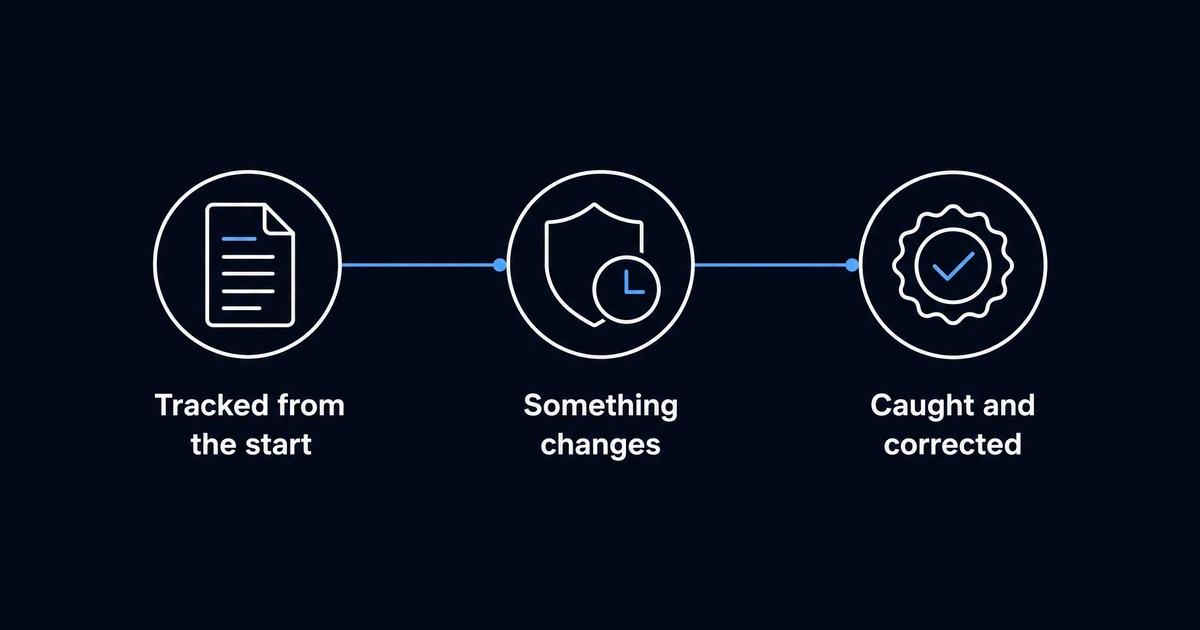
The goal was not just to move the stranded donations. It was to make the platform able to prove, at any moment, that every donation is where it should be and that the path it took is fully traceable.
Detecting ineligibility and reassigning safely. The system now records the date a nonprofit becomes ineligible and moves its donations into a "pending reassignment" state. It also checks eligibility before a donation is created, so it starts in the right state. A fallback configuration, set per store or globally by category, sends a reassigned donation to a nonprofit that fits its category, not just a default. Two guardrails matter here: a donation already paid out is never reassigned, and changing the fallback config no longer disturbs reassignments already in progress.
A dedicated audit trail. Every reassignment, cancellation, and refund is recorded with the user who performed it and a before-and-after snapshot. The journey of any donation, from which organization to which, by whom, when, and why, can now be reconstructed for an audit. This is the piece that turns "we think it's fine" into "here is the record," and it's the part a regulated flow depends on most.
Safer bulk cancellations. Canceling donations across many invoices now runs through a dry run first: it previews which donations are affected, their current and new state, and the current and expected state in Stripe, before anything executes. Refunds are also supported when an invoice has already been paid. The point is that a sensitive financial action is reviewed before it runs, not corrected after.
Visibility for the people responsible. A compliance view gives admins and merchants filters, detail by store or nonprofit, and real-time plus email notifications when something affects their donations. Access is controlled, so only an admin can run automatic reassignments. Along the way, connection and event failures that had been interrupting these processes were fixed, making the whole flow steadier.
The outcome
Donations no longer remain indefinitely assigned to ineligible nonprofits. Once a nonprofit becomes ineligible, its donations are flagged, and after the regulatory window they are automatically reassigned to an eligible organization in the same category. Compliance stops depending on someone noticing in time.
Every donation is auditable. Each one carries its full history, from which organization to which, by whom, when, and why, ready for an audit. That is exactly what a regulated flow needs, and exactly what was missing before.
Sensitive operations are more controlled. Bulk cancellations are previewed before they run, already-paid donations are protected, and the risk of financial errors or mismatches with Stripe drops. Less of the work is manual, one-donation-at-a-time correction, and more of it is automatic and reviewable.
What this shows about building for regulated flows
When software sits on a regulated money flow, correctness isn't enough on its own. The system also has to be accountable: able to show what happened, who did it, and that nothing fell outside the rules. That takes detecting state changes automatically, keeping a trail that survives an audit, and making sensitive actions reviewable before they commit.
The difference in this project is where compliance lives. It wasn't added as a monitoring layer on top of a finished feature. It was built into how the platform works, into the states a donation can hold, the guardrails on what can change, and the record of every move. That is what it means to engineer for a business that answers to real money and real regulation.
Keep reading
All resources Case study
From silent payment failures to five-minute alerts
A subscription platform's card billing failed silently for about two years. The real work was making a critical revenue operation visible in minutes, not just restoring it.
 Case study
When order automation meets a supplier's limits: building reliability into the integration
A custom-apparel order platform where the real reliability work lived in the supplier integration, not the interface: handling the supplier's limits, failed retries, and order integrity.
 Articles
Data engineering services: when better reporting needs a better data foundation
A buyer's guide to telling a reporting problem from a data foundation problem: the signs, what a reliable foundation includes, when to build or rebuild, and what to ask before you hire.