

Discovery checklist: 24 questions before you sign a SOW
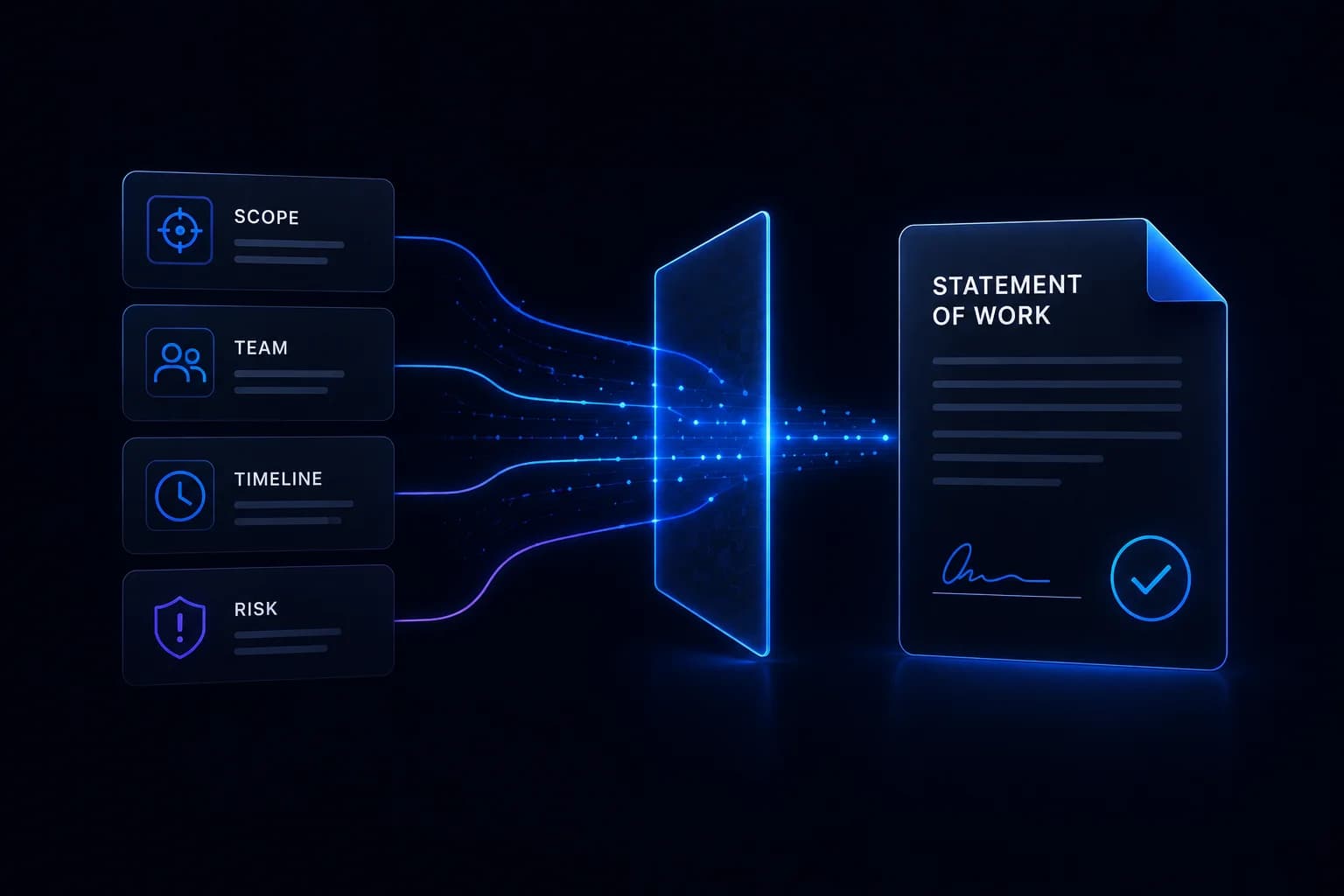
24 questions grouped into five areas, goals, risks, ownership, success criteria, and delivery assumptions, to align on before signing a statement of work.
 Guide
GuideOn this page8 sections
Most scope disputes trace back to a question nobody asked during discovery. Here is the checklist that catches them first.
Why discovery matters before a SOW
A strong discovery process helps product, engineering, and business stakeholders align before committing to scope, budget, and timeline. These 24 questions are grouped into five areas: goals, risks, ownership, success criteria, and delivery assumptions. Answering them before you sign is what turns a statement of work into a shared plan instead of a guess.
Clarify business goals
- 1. What business outcome is this project meant to produce, beyond shipping the feature itself?
- 2. Who is the end user, and what problem are they trying to solve today without this?
- 3. What happens if this project is delayed by a quarter? Does the business goal still hold?
- 4. Is this project replacing something that already exists, and if so, why is the current version not enough?
- 5. What would make this project a failure even if every ticket gets closed?
Identify technical risks
- 6. Which parts of the system are well understood, and which are still assumptions?
- 7. Are there third-party integrations involved, and has anyone confirmed their current documentation is accurate?
- 8. What is the oldest or most fragile part of the stack this project will touch?
- 9. Has a technical spike or proof of concept been run on the riskiest assumption, or is it still theoretical?
- 10. What happens to data, users, or traffic if this integration or migration fails partway through?
Define ownership
- 11. Who owns the final decision when design, engineering, and business priorities disagree?
- 12. Who is the single point of contact for questions that come up mid-sprint?
- 13. Which decisions require client sign-off, and which can the delivery team make on its own?
- 14. Who is responsible for environments, credentials, and access once the project starts?
- 15. If the primary stakeholder is unavailable for a week, who has the authority to keep things moving?
Agree on success criteria
- 16. What does done look like for this project, in terms a non-technical stakeholder would accept?
- 17. Are there performance, security, or compliance thresholds the delivery must meet, and are they written down?
- 18. How will success be measured after launch, not just at handoff?
- 19. What is explicitly out of scope, and has that been written down anywhere both sides can see it?
- 20. If priorities shift mid-project, what is the agreed process for changing scope without derailing the timeline?
Validate delivery assumptions
- 21. Is the timeline based on a similar project delivered before, or is it an estimate with no precedent?
- 22. What is the plan if a key requirement turns out to be more complex once work begins?
- 23. How will progress be reported, and how often, so surprises show up early instead of at the deadline?
- 24. What happens after launch: is there a support or iteration period built into the plan, or does the relationship end at delivery?
Red flags during discovery
A vendor who skips most of these questions and moves straight to a quote is pricing risk they have not identified, and that risk becomes your problem later. Watch for a scope document with no named owner, a timeline with no reference project behind it, and success criteria that only get defined after the contract is signed.
Why this matters before a SOW
A statement of work is only as good as the discovery behind it. These questions surface the assumptions, risks, and ownership gaps that turn into change requests and missed deadlines when they are not caught early. Getting clear answers before signing is what makes the SOW a plan both sides can execute, not a document that gets renegotiated by month two.
At NetForemost, every engagement starts with a structured discovery session built around these questions, so the statement of work reflects the real scope rather than a first guess.
Keep reading
All resources Articles
How to choose custom software development services
What custom software development services include, how discovery reveals a real partner, the engagement models, and the questions to ask before you sign.
 Articles
The bottleneck didn't disappear. It just changed its address.
AI made engineers faster — but throughput on the main branch is falling. Three tool launches in two weeks reveal where the bottleneck actually moved, and what it means for teams adopting AI coding agents.
 Articles
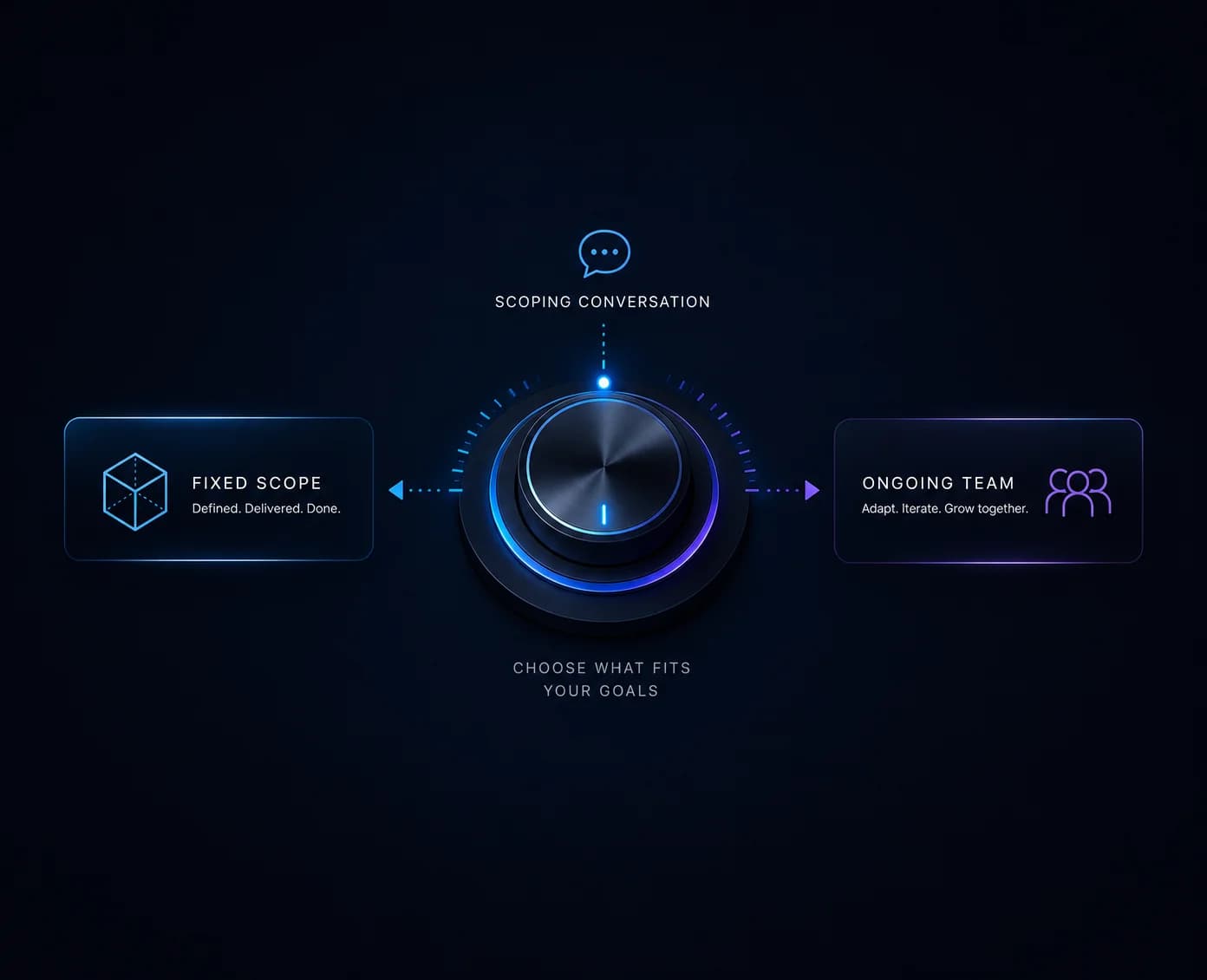
Fixed-scope or ongoing team? A scoping conversation that helps you choose
Four signals that tell you whether a fixed-scope engagement or an ongoing team fits your project, before you sign anything.