

Understanding Automated Testing: A Game-Changer for QA
Automated testing is reshaping the way software quality assurance is handled. It involves using tools to run tests on software automatically, without […]
 Articles
On this page5 sections
Automated testing is reshaping the way software quality assurance is handled. It involves using tools to run tests on software automatically, without human intervention, ensuring that applications run smoothly and efficiently. This approach is crucial for detecting errors early and cutting down on manual testing time, playing a significant role in delivering polished software products.
Compared to manual testing, which requires testers to execute tests manually at every phase, automated testing allows for repeated execution with minimal effort. This means faster results and higher accuracy since the same tests can be run consistently across various stages of development. With the rise of custom software development, integrating automated tests has become invaluable in keeping pace with the rapid development cycles demanded by modern projects.
By embracing automated testing, developers can focus on creating custom solutions without being bogged down by repetitive testing tasks. This shift not only boosts productivity but also ensures that any issues are identified and resolved swiftly. As a result, software products not only reach the market faster but are also more reliable, providing users with a seamless and satisfying experience.
Understanding Automated Testing
Automated testing uses specialized software to perform checks on applications, ensuring they function as expected. This approach plays a crucial role in QA by helping to identify bugs and defects early in the development process. Automated tests are particularly beneficial for repetitive tasks where consistency and speed are essential.
Unlike manual testing, where testers manually execute each test case, automated testing allows tests to run automatically without manual intervention. This difference results in faster testing cycles and reduced human error. Manual testing is still valuable for exploratory and ad-hoc testing, where human judgment is needed. However, automated testing excels in functional, regression, and performance testing due to its ability to execute a large number of tests quickly and accurately.
Integrating automated testing into custom software development streamlines the QA process. It ensures that every part of the software is checked thoroughly and repeatedly, which is particularly important when frequent updates are required. By incorporating automation, developers ensure that custom solutions are robust, reliable, and ready for deployment. This integration saves time and resources, helping teams respond quickly to bugs and changes in requirements, ultimately leading to a higher quality product.
Benefits of Automated Testing in QA
Automated testing offers numerous advantages that enhance the QA process:
1. Efficiency: Automated tests can run 24/7 without needing breaks, speeding up the testing process considerably.
2. Accuracy: Tests are run in a consistent manner, which reduces the likelihood of human error and improves reliability.
3. Cost-Effectiveness: While the initial setup requires investment, automated testing reduces long-term testing costs because it requires less manual labor once established.
Automated testing significantly speeds up the development process. It allows for quicker turnaround times by identifying issues early, which means faster resolution. As updates and new features are added, automated tests can quickly verify that existing functionality remains intact. This efficiency is crucial in maintaining a consistent pace in agile development environments.
Scalability and reliability are key strengths of automated tests. They handle large test databases efficiently, ensuring coverage even as the software grows in complexity. Automated tests are consistent and do not vary their results with repeated execution, maintaining reliability across different environments and configurations. This scalability makes automated testing a smart choice for large projects where manual testing would be impractical. By relying on automated testing, teams can ensure their software meets high standards while optimizing resources effectively.
Implementing Automated Testing Successfully
Implementing automated testing involves several key steps to ensure a successful strategy. Start by defining clear goals for what you want to achieve with automated testing. These could include reducing test cycle time, improving test coverage, or minimizing human errors. Once objectives are clear, it’s time to identify the test cases that will benefit the most from automation, typically focusing on repetitive and time-consuming ones.
Choosing the right tools is crucial. Prioritize technologies that align with your project’s needs. For example, programming languages and frameworks like Ruby, .NET, and Flutter are great options for building robust and flexible test scripts. Investing in the right toolset will streamline the automation process and save resources in the long run.
Maintaining and optimizing test scripts is vital for ongoing success. As software evolves, ensure that your test scripts remain relevant and efficient. Regular reviews and updates to these scripts will prevent technical debt from piling up and ensure tests continue to deliver accurate results. Keep an eye on test performance to identify any scripts that are becoming bottlenecks and refine them as necessary.
Overcoming Challenges in Automated Testing
Automated testing comes with challenges, but knowing common pitfalls helps you avoid them. One major issue is the initial setup and learning curve, which can be intimidating. To address this, start with small, manageable projects to build experience and confidence in the automation tools.
Maintenance and updates are also significant challenges. Automated tests need constant updates as the application evolves. Developing a solid maintenance plan is crucial. This can include regular reviews of test cases to ensure they remain effective and relevant. It is also important to organize scripts systematically to simplify updates and reduce maintenance overhead.
To ensure robust outcomes, embrace continuous testing and feedback. Implement systems for real-time monitoring of test results and foster an environment that encourages regular feedback. This proactive approach helps in quickly identifying issues and implementing fixes, which ensures that automated tests remain reliable and valuable tools in the QA process.
Conclusion:
Automated testing is a game-changer in ensuring the quality and reliability of software. By automating repetitive and error-prone tasks, teams can focus on more strategic elements, enhancing overall productivity. Successful implementation requires a thoughtful approach, incorporating the right tools and ongoing maintenance to adapt to software changes.
Automation is not just about running tests faster; it’s about making smarter testing choices that lead to better software. With careful planning and continuous improvement, automated testing can significantly elevate the caliber of software products, making them more robust and user-friendly.
NetForemost is committed to taking your software quality to the next level with our expertise in automated testing. Whether you’re looking to streamline your QA process or integrate new testing technologies, we have the knowledge and tools to help you succeed. Contact us today to explore how we can transform your testing strategy and deliver the quality your projects demand.
Teams that want this level of automation without building a dedicated QA function from scratch often turn to our QA automation support to get there faster.
Keep reading
All resources Case study
Making an AI product reliable enough to ship: a QA and evaluation case
Generating AI ratings was the easy part. Making them reliable enough to ship took a continuous evaluation and QA loop, validated with real users before launch.
 Case study
Health and Wellness Mobile App Development Case Study
When a client's input slows down in the middle of a project, delivery does not have to stall.
 Case study
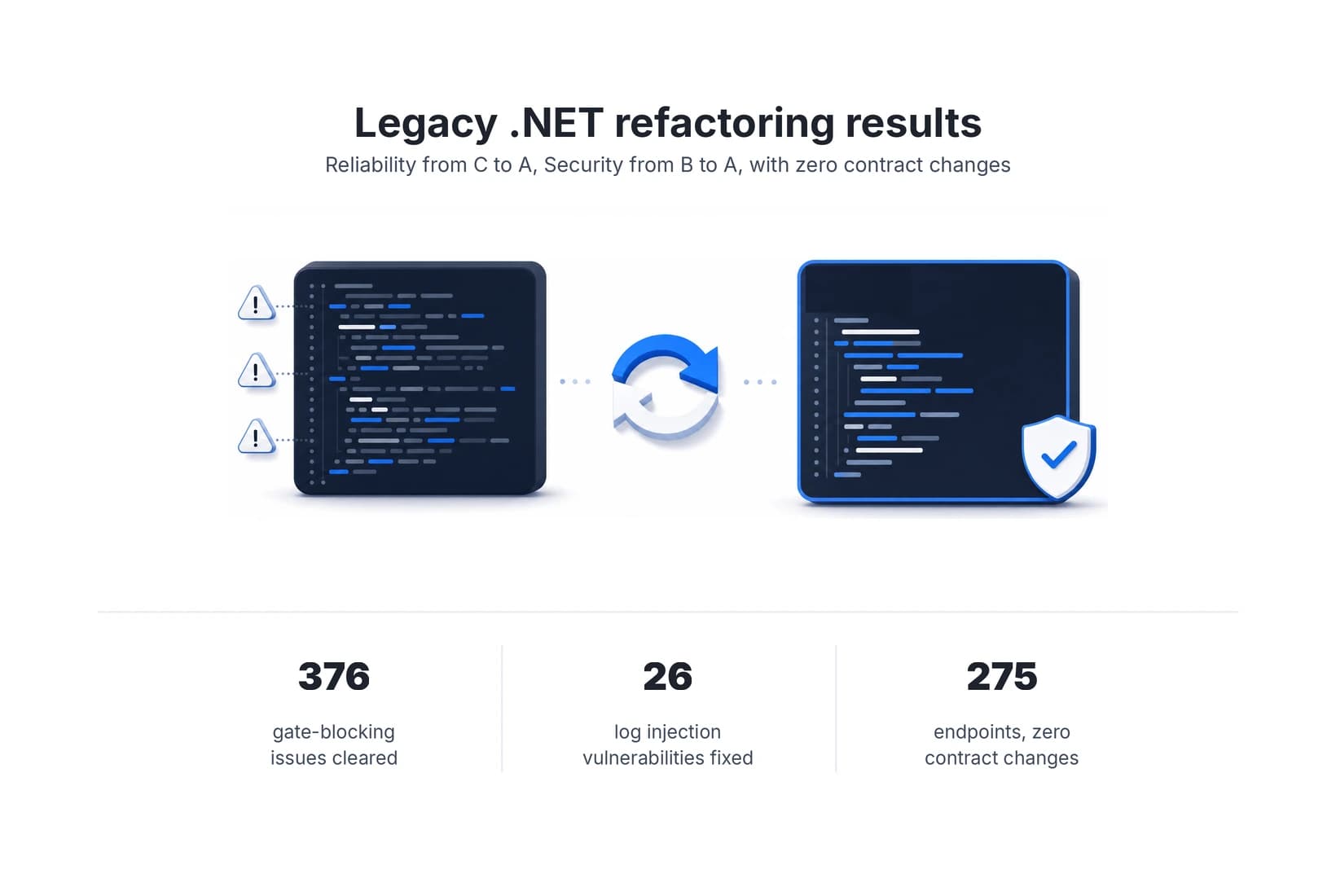
Legacy code refactoring on a live .NET 8 API, with zero contract changes
How AI-native development cleared a blocking SonarQube quality gate and 26 log injection vulnerabilities in a production .NET 8 API, with zero contract changes across all 275 endpoints.