

Maximizing Business Value Through Machine Learning Implementation
Machine learning is no longer some far-off idea that only tech companies focus on. It’s part of how smart businesses operate. Whether […]
 Articles
On this page6 sections
- Understanding Machine Learning Implementation
- Key Steps For Effective Machine Learning Deployment
- Overcoming Challenges in Machine Learning Implementation
- Real-World Machine Learning Use Cases That Drive Results
- How NetForemost Can Help You Succeed With Machine Learning
- Machine Learning That Moves Your Business Forward
Machine learning is no longer some far-off idea that only tech companies focus on. It’s part of how smart businesses operate. Whether it’s sorting emails, suggesting movies, or spotting trends in customer behavior, machine learning makes everyday processes smoother and more useful. It catches patterns that humans usually don’t see and helps automate decisions that normally take hours or even days. That speed and accuracy are part of what’s making machine learning a real difference across industries.
But using machine learning isn’t just about getting faster or fancier systems. It’s about solving problems in a smarter way and getting more value out of what you already have. Businesses are realizing that when machine learning is done with purpose, it leads to improvements that stick, moving from trial runs to strong, ongoing results. The challenge, though, is understanding how to actually apply it in a way that fits your goals. That’s what separates a useful tool from a wasted budget, and that’s exactly what we’re breaking down here.
Understanding Machine Learning Implementation
Machine learning may sound intense, but at its core, it’s simply about teaching a computer system to recognize patterns through examples instead of direct instructions. Rather than being programmed step-by-step, the system learns by analyzing real data. Think of it like this: someone learns to tell the difference between a ripe banana and a green one by seeing and handling many bananas. A machine does something similar with data, only much faster.
That said, not every business problem calls for machine learning. It works best when there’s a clear question to answer based on patterns in existing data. For example, if you’re dealing with a high number of customer service tickets, a machine learning model could be taught to sort them by issue type or predict which ones may need a live agent instead of an automated response. That allows your team to focus their time better and respond faster without lowering the service quality.
Before creating any model, strategy needs to come first. Ask questions like:
– What business goal are we trying to meet with machine learning?
– What kind of data do we already collect?
– How would we measure a successful outcome?
– What resources are available to support testing and updates?
Machine learning goals should be tied directly to your wider business goals. You may want to improve customer retention, reduce support costs, or make offers more personalized. Whatever the goal, linking it to specific business results is key to making the effort worthwhile. It also helps avoid wasted time on experiments that don’t lead anywhere.
Key Steps For Effective Machine Learning Deployment
Once the goals are clear, it’s time to move forward with the actual steps. There’s a workflow most companies follow, and skipping any part usually leads to weak models or wasted effort.
Here are the parts you don’t want to overlook:
1. Identify the problem you want to solve. Be precise. Saying “we want to boost revenue” is too broad. Instead, say “we want to predict which site visitors are likely to make a purchase.”
2. Gather the right data. The quality of your model depends on the quality of the data it’s trained on. Old, messy, or inconsistent data won’t provide good results. Cleaning that up should come first.
3. Preprocess the data. This means dealing with missing information, removing duplicates, making sure fields are aligned, and converting formats if needed. It takes time but sets the foundation for everything else.
4. Train the model. Let the system look for patterns in the cleaned data. It’s normal for this step to go through multiple versions before it hits the right mix of accuracy and consistency.
5. Test and improve. Even a good model needs to be tested using fresh data. If it starts giving false results or misses the mark, go back and tweak it. These updates can determine long-term success.
Keep the models approachable and easy to link with your existing systems. That helps drive practical outcomes that support day-to-day business functions instead of creating separate workload silos.
Overcoming Challenges in Machine Learning Implementation
Machine learning projects can produce strong results, but they also run into some common roadblocks, especially early on. One of the biggest is poor data. If you start with flawed input, the system picks up those same mistakes. Whether it’s missing values, wrong entries, or outdated records, those issues add up quickly. Time spent fixing these problems early will save frustration later when the model doesn’t behave as expected.
Another trap is the set-it-and-forget-it mindset. Just because you’ve launched a model doesn’t mean the work is done. Over time, trends shift and customer habits change. If your model uses old training data, it may stop being helpful. That’s why updates are part of any long-term machine learning plan. You don’t need to start over each time. Often, just retraining the system using more recent data is enough to get it back on track.
It’s also tempting to load a single model with too many tasks. When a project tries to solve five problems at once, it usually doesn’t solve any of them well. It’s better to tackle one issue at a time. Say you want to spot unusual purchase behavior or late shipments. Those are well-defined use cases that can show quick results and build momentum for the next machine learning project.
Finally, don’t let unrealistic timelines throw you off. It’s normal for advancing through training, testing, and tuning stages to take weeks or months depending on the scale. This doesn’t mean you’re doing it wrong. It means the model is forming its logic carefully to deliver meaningful benefits.
Real-World Machine Learning Use Cases That Drive Results
Machine learning already plays a role in many industries—it isn’t just for tech companies or research labs. The systems just adapt based on the goals and data of each business.
A retail company, for example, might use models to forecast which products will likely sell out fast, or when customers are most likely to cancel orders. One retailer noticed a large number of customers abandoning their orders at checkout. Machine learning helped highlight two key friction points: confusing return policies and surprise shipping fees. Once those were updated, the order completion rate saw a boost.
Other areas where machine learning is making a big difference include:
– Finance: Detecting fraud by flagging unexpected transactions or patterns. Also used to recommend new services based on customer habits.
– Healthcare: Helping doctors make diagnoses faster and plan treatments using patient history and symptom trends.
– Manufacturing: Monitoring processes to find faults before they lead to serious issues, cutting down on waste and downtime.
– Logistics: Forecasting delays or optimizing delivery routes to reduce fuel costs and wait times.
Many of these changes happen little by little. A small time savings or a better prediction may not look huge on its own. But over thousands of transactions or customer interactions, it adds up to real efficiency gains and better overall performance.
How NetForemost Can Help You Succeed With Machine Learning
At NetForemost, we build machine learning solutions based on what your business really needs. Some firms just drop in a one-size-fits-all setup. We don’t do that. We take time to look at how your current systems work, what tools you’re already using, and how your teams operate. That’s how we design solutions that don’t add clutter—they solve problems.
We’ve worked with clients across industries like retail, healthcare, logistics, and finance. Whether it’s designing a model from scratch or fixing one that isn’t performing well, we’ve been there. We know how to create solutions that actually plug into day-to-day use.
Already have an AI setup that’s falling short? Or maybe you’re trying to decide if machine learning even fits your plans? Either way, we can help make sense of what’s next.
Machine Learning That Moves Your Business Forward
When used with purpose, machine learning isn’t just a new tech buzzword. It becomes a smart way to make better use of the data and tools your business already has. From faster insights to smarter workflows, the impact runs wide.
But the key is applying it with real goals in mind. Machine learning works when it’s aimed at clear tasks and built to fit within how your team already operates. It’s not about flashy dashboards or endless models. It’s about smoother decisions and faster results.
Whether you’re dealing with slow processes or looking for the next edge in automation, machine learning can guide real progress. Let it become a tool that actually works for your team, not just an experiment sitting on a shelf.
Looking to harness the full potential of machine learning in your business? Discover how NetForemost can guide you through the complexities and innovations in AI and Data Science. We’ll help you turn your data into smarter decisions and long-term growth.
Ready to transform your business with machine learning? At NetForemost, we offer tailored software development services to integrate AI solutions that align with your business goals. Let us guide you through the complexities of machine learning and turn your data into actionable insights for long-term growth. Partner with us to make smarter decisions and achieve real progress.
Keep reading
All resources Articles
What AI changed about how we evaluate engineers
A founder's account of how five years of AI changed what NetForemost looks for in an engineer, from output to judgment, and why that shift moves the whole delivery bottleneck.
 Case study
Health and Wellness Mobile App Development Case Study
When a client's input slows down in the middle of a project, delivery does not have to stall.
 Case study
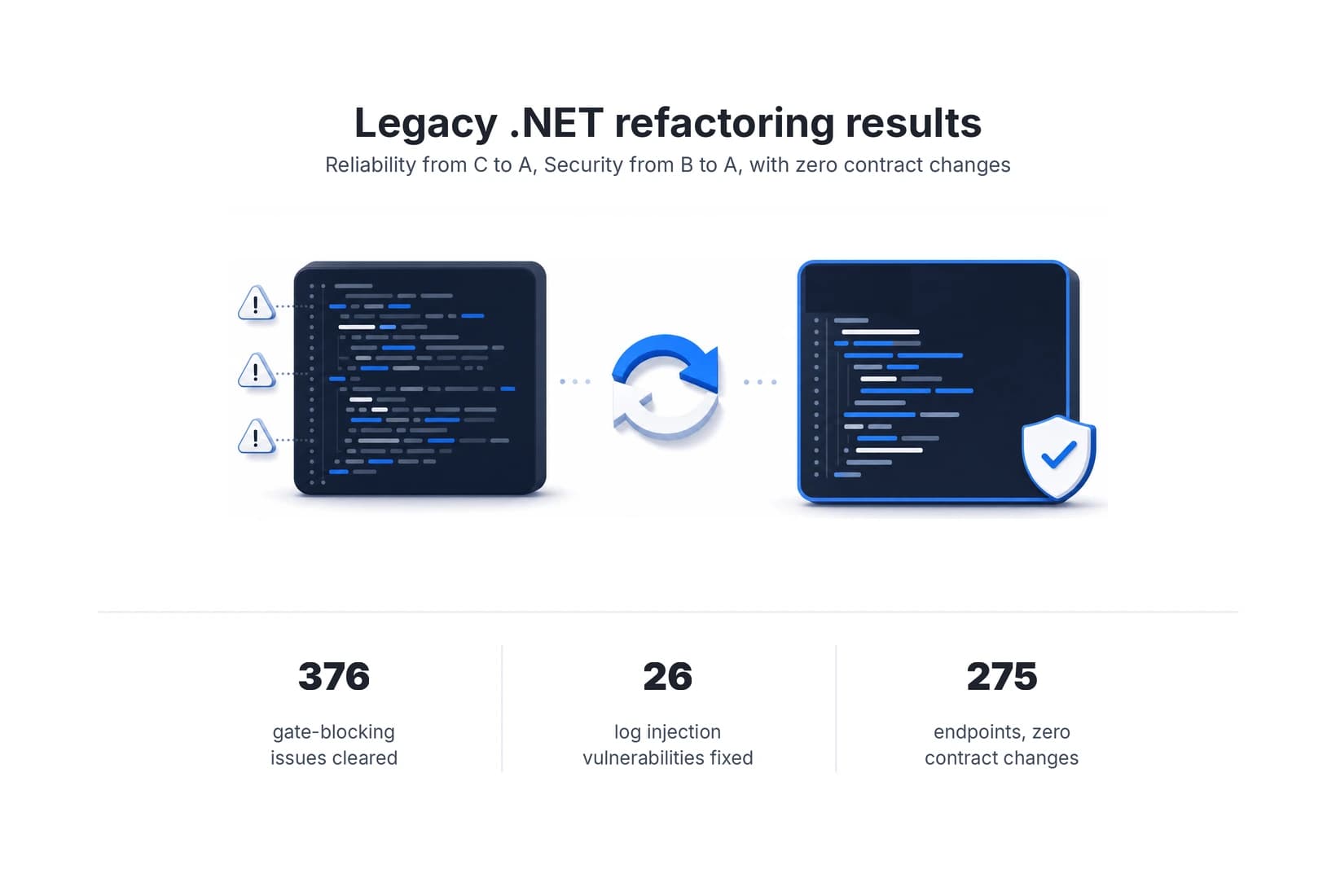
Legacy code refactoring on a live .NET 8 API, with zero contract changes
How AI-native development cleared a blocking SonarQube quality gate and 26 log injection vulnerabilities in a production .NET 8 API, with zero contract changes across all 275 endpoints.