

How to evaluate QA testing services: a vendor selection guide
The criteria that separate real QA partners from checkpoint vendors, plus a scorecard to rate them, red flags to watch for, and the questions to ask before you sign.
 Articles
On this page21 sections
- What separates strong QA and testing services from average ones
- Regression testing treated as a living asset
- Automation tied to release risk
- Release validation and sprint integration
- The NetForemost QA partner scorecard
- How to score it
- Score bands
- What strong QA looks like in practice
- Android app: stability below target
- API platform: recurring bugs and slow releases
- Artifacts a strong QA partner can show you
- Release-readiness checklist
- Defect report
- The core service types, and what each delivers
- Why the delivery model matters as much as the service list
- Types of QA providers, by focus
- Trust signals worth verifying
- Engagement models, matched to your release cadence
- Red flags when evaluating a QA partner
- The questions to ask before you hire
- The bottom line
The tool stack and the badges tell you almost nothing. Whether QA is built into delivery tells you almost everything.
The best way to evaluate QA testing services is to look at three things: how the provider handles risk before release, how QA works with developers during delivery, and whether quality shows up as concrete evidence rather than claims. The rest of this guide turns those three into criteria you can score.
QA gaps usually stay invisible until production finds them for you: a customer-facing bug, a failed release, a regression that slipped through because nobody owned the test suite. Evaluating partners before that happens puts you ahead of the teams that wait for production to tell them something is wrong. This guide gives you the criteria that separate real partners from checkpoint vendors, a scorecard to rate them, the service types and engagement models to understand, red flags to watch for, and the questions to ask before you sign.
What separates strong QA and testing services from average ones
Surface-level differences between vendors are easy to list: tools used, team size, certifications held. The structural differences are what protect production, and those are the ones to evaluate.
Regression testing treated as a living asset
Strong QA partners keep regression suites current. Test cases are updated when the product changes, coverage is reviewed at the start of each sprint, and regression runs consistently, not whenever someone has time. Weaker vendors run a fixed set of cases inherited from the first engagement and rarely revisit them. Over time that suite drifts out of sync with the codebase and starts passing tests against behavior that no longer works the way it was built.
Coverage should be risk-based, not a single number. Business-critical modules warrant more coverage than low-risk flows. A good partner explains their coverage philosophy in those terms rather than quoting one percentage as if it applied everywhere.
Automation tied to release risk
Automated coverage on low-risk screens is worth less than automation on critical API contracts, authentication paths, and integration points. Automation is only as useful as the coverage decisions behind it. Strong services map automation to release-blocking risk and integrate test execution into the CI/CD pipeline, so tests run on pull requests, gate deployment stages, and publish results back without manual steps. CI/CD integration is a baseline expectation, not an upsell.
A simple test for what to automate: is the flow business critical? If yes, is it run frequently? If yes, is it stable enough that the test will not break on every interface change? If yes, automate it. A flow that fails any of those checks usually belongs in manual or exploratory testing, not the automation backlog. A vendor who automates by default, without that filter, is building a suite that costs more to maintain than it protects.
Release validation and sprint integration
Strong QA does not start after development ends. When QA is part of the sprint, test design happens during planning, execution runs alongside development, and a clear release gate exists for production deployments. Vendors who receive a finished build and only then begin testing are acting as a checkpoint, not a partner. The practical effect is that issues surface earlier, while they are still cheap to fix, instead of after release when they are not.
The NetForemost QA partner scorecard
Most QA articles give you questions. This gives you a way to score the answers. Rate each shortlisted vendor on the seven criteria below, weight the results, and you get a single number that tells you whether you are looking at a delivery partner or a checkpoint.
- Sprint integration (20%). Weak: QA receives completed builds. Average: QA joins some ceremonies. Strong: QA participates from planning.
- Regression ownership (15%). Weak: ad hoc regression. Average: maintained periodically. Strong: updated every sprint.
- Risk-based coverage (15%). Weak: coverage percentage target. Average: some prioritization. Strong: business-risk mapping.
- Automation strategy (15%). Weak: automate everything possible. Average: automation backlog. Strong: automation based on release risk.
- Release gates (15%). Weak: informal sign-off. Average: QA approval. Strong: defined go or no-go criteria.
- Reporting (10%). Weak: bug count. Average: severity and coverage. Strong: release-risk dashboard.
- Communication (10%). Weak: async ticket handoff. Average: regular meetings. Strong: embedded delivery communication.
How to score it
Rate each criterion weak (1), average (3), or strong (5). Multiply each score by its weight, add the results, and multiply by 20 for a final score from 20 to 100.
Score bands
Use these ranges as a practical benchmark when comparing vendors:
- 85 to 100: integrated QA partner
- 70 to 84: capable QA vendor
- 50 to 69: execution-focused testing provider
- Below 50: high-risk checkpoint vendor
The weighting puts more emphasis on the parts of QA that stay visible across releases, sprint integration and regression ownership, not just during final testing. A vendor can look strong on tooling and still score low here, and that gap is exactly what a feature list hides.
What strong QA looks like in practice
Criteria matter most when you can see them applied to a real product. Two examples, each pointing to a different part of the scorecard.
Android app: stability below target
The work here was not a bigger test suite. The team analyzed the primary causes of instability, prioritized the problems with the greatest user impact, and applied targeted fixes, cutting the user-perceived crash rate from 0.54% to 0.36% (about 33%) and the ANR rate from 0.84% to 0.26% (about 69%). What to notice: regression discipline and release validation, not headcount.
API platform: recurring bugs and slow releases
A manual regression process meant a six-week deployment cadence and recurring production errors. Building an automated suite into the CI pipeline prevented about 75% of previously recurring production bugs and moved releases to every two weeks. What to notice: test automation and CI, tied to release risk. A partner who cannot point to concrete before-and-after numbers is asking you to take integration on faith.
Artifacts a strong QA partner can show you
Ask to see the working documents, not just the pitch. A vendor who treats QA as part of delivery can show anonymized versions of the artifacts below in a discovery call. A vendor who cannot show any representative artifact should be able to explain why and show the underlying process another way.
Release-readiness checklist
- Critical workflows tested and passing
- Regression suite run against the release candidate
- Open release-blocking defects: 0
- Known risks documented and accepted
- Acceptance criteria validated at the ticket level
- Go or no-go owner identified
Defect report
- Severity: critical
- Environment: production candidate
- Steps to reproduce: documented and repeatable
- Expected result vs actual result: recorded
- Release impact: blocks release
- Owner: named
The automation decision test earlier in this guide is a third artifact worth asking about. Together, these show whether a vendor runs a process or improvises one per project.
The core service types, and what each delivers
Before you talk to vendors, get a clear picture of what each service type includes. The categories are consistent across the market, but the deliverables vary more than the marketing suggests.
Functional testing covers test case design, manual execution, bug verification, acceptance testing, and exploratory testing. Automation adds framework setup, scripted suites, CI/CD integration, regression automation, and ongoing maintenance of the test library. API testing validates service contracts and integration points, often with automation on top. Functional plus automation is the most common core pairing, and the right baseline for most teams running regular release cycles.
Performance, security, and accessibility testing are usually add-ons or part of broader full-cycle engagements. Performance testing covers load and stress testing, bottleneck analysis, and scalability reporting. Security work can include vulnerability assessment and penetration testing, while compliance validation addresses whether the product and processes meet specific regulatory or framework requirements. Accessibility testing focuses on conformance and usability reporting. Decide which of these are non-negotiable for your product before you shortlist, because a fintech platform and a marketing tool do not carry the same requirements.
Why the delivery model matters as much as the service list
Two vendors can offer identical service menus and produce very different results, depending on how their QA engineers actually work with your team.
When a QA engineer sits outside the delivery team, they meet the product after decisions are already made. They test what was built rather than influencing how it gets built. When QA is embedded alongside developers from the start, testers catch integration problems during design, surface edge cases before they become bugs, and help own the release gate instead of only signing off at the end. Blockers get resolved in the same sprint they are found, and release quality improves over cycles because the team keeps learning what breaks and why.
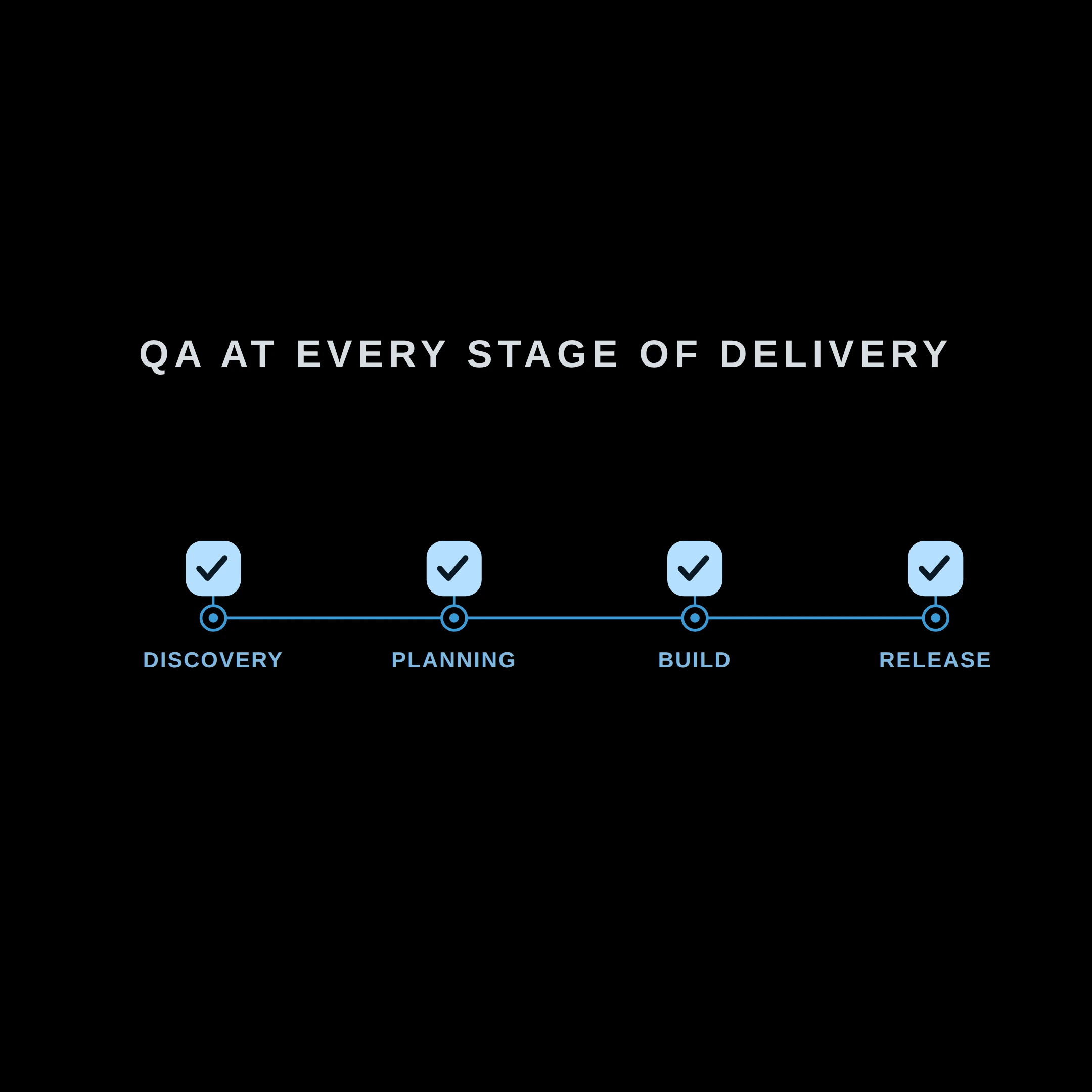
This is the model NetForemost is built around, and it follows a defined workflow: discovery, test planning, test case design, manual QA, regression testing, bug reporting, and release validation. QA is involved from planning, acceptance and test criteria are set before development starts, work is validated at the ticket level, and regression runs before release. Quality is part of how the team delivers, not a function patched in after go-live.
Types of QA providers, by focus
The right provider depends on your product, team structure, and testing gaps. It helps to think in categories rather than logos. Automation-focused providers concentrate on end-to-end coverage and fast regression on web applications. Crowdsourced networks are strong for functional, mobile, and localization testing across many devices and locales. Full-cycle QA companies cover manual, automation, and performance work under one roof, sometimes with compliance or accessibility depth. Integrated delivery partners provide QA as part of a full delivery team rather than as an isolated testing contract.
Match the category to your gap. If you need regression automation on a web app, an automation specialist may fit. If quality keeps slipping between design, development, and release, an isolated testing contract will not fix the seam, because that is a delivery problem, not a testing one.
Trust signals worth verifying
Vendor websites look alike, so verify the signals that mean something. Treat certifications such as ISTQB Foundation Level and relevant Advanced Level certifications, such as Test Automation Engineering, as supporting signals, not substitutes for delivery evidence. Ask for ISO 9001 documentation if quality management maturity matters to your organization, and ISO 27001 if your product handles sensitive data. If security is critical, ask for a current SOC 2 Type II report rather than a claim of alignment, since a Type II report shows operating effectiveness over time, not a single point in time.
Case studies should include the client type, the specific problem, the approach, the timeline, and concrete outcomes. Success stories without specifics are marketing, not evidence.
Engagement models, matched to your release cadence
Structure matters as much as rate, and it usually comes down to three models. Staff augmentation fits short-term capacity gaps or a specialist skill your team is missing, with senior engineers embedding into your existing team. Project-based delivery fits a defined project a full team can own end to end, like a single release cycle or an automation build. A dedicated team is the right model for ongoing products that need continuous regression ownership, multi-release support, and long-term suite maintenance.
Red flags when evaluating a QA partner
Some signals tell you a vendor is a checkpoint dressed up as a partner. Watch for these:
- QA only joins after development is complete
- The vendor talks about number of test cases rather than release risk
- No clear owner for regression-suite maintenance
- Automation percentage is treated as the main KPI
- They cannot show a sample test plan or defect report
- They cannot explain their go or no-go release criteria
- QA engineers rarely communicate directly with developers
- Tests are not part of CI/CD
- Every bug is treated with equal priority
- Escaped defects are never measured
The more of these signals you see, the more closely you should examine whether QA is actually integrated into delivery, or bolted on at the end.
The questions to ask before you hire
Discovery calls are where you find out whether a vendor delivers what they claim. These eight questions tell you most of what you need to know:
- How do your QA engineers integrate with development sprints, and at what point do they join?
- What does your regression suite maintenance look like when the product changes?
- How do you decide what gets automated versus what stays manual?
- What does your release validation gate include, and who owns the go or no-go decision?
- Can you share a sample test plan and defect report from a comparable project?
- How do you handle scope changes or shifting priorities mid-engagement?
- What certifications does your QA team hold, and at what level?
- Who owns communication if a critical bug is found the day before go-live?
Treat these as evaluation criteria, not conversation starters. A vendor who cannot answer the regression maintenance question clearly is probably not treating test suites as long-term assets. A vendor who cannot describe their release gate is probably testing builds after development ends.
The bottom line
The difference between average and genuinely strong quality assurance and testing services for software development is not the tool stack or the service menu. It is whether QA is embedded in how your team works or treated as a final checkpoint before release. Regression depth, automation targeting, sprint integration, and release validation ownership are the filters that matter.
So ask every vendor you shortlist the same question: is QA part of your delivery model, or does it come after? If you want QA integrated from day one, that is the model NetForemost is built around.
Keep reading
All resources Case study
Health and Wellness Mobile App Development Case Study
When a client's input slows down in the middle of a project, delivery does not have to stall.
 Case study
Legacy code refactoring on a live .NET 8 API, with zero contract changes
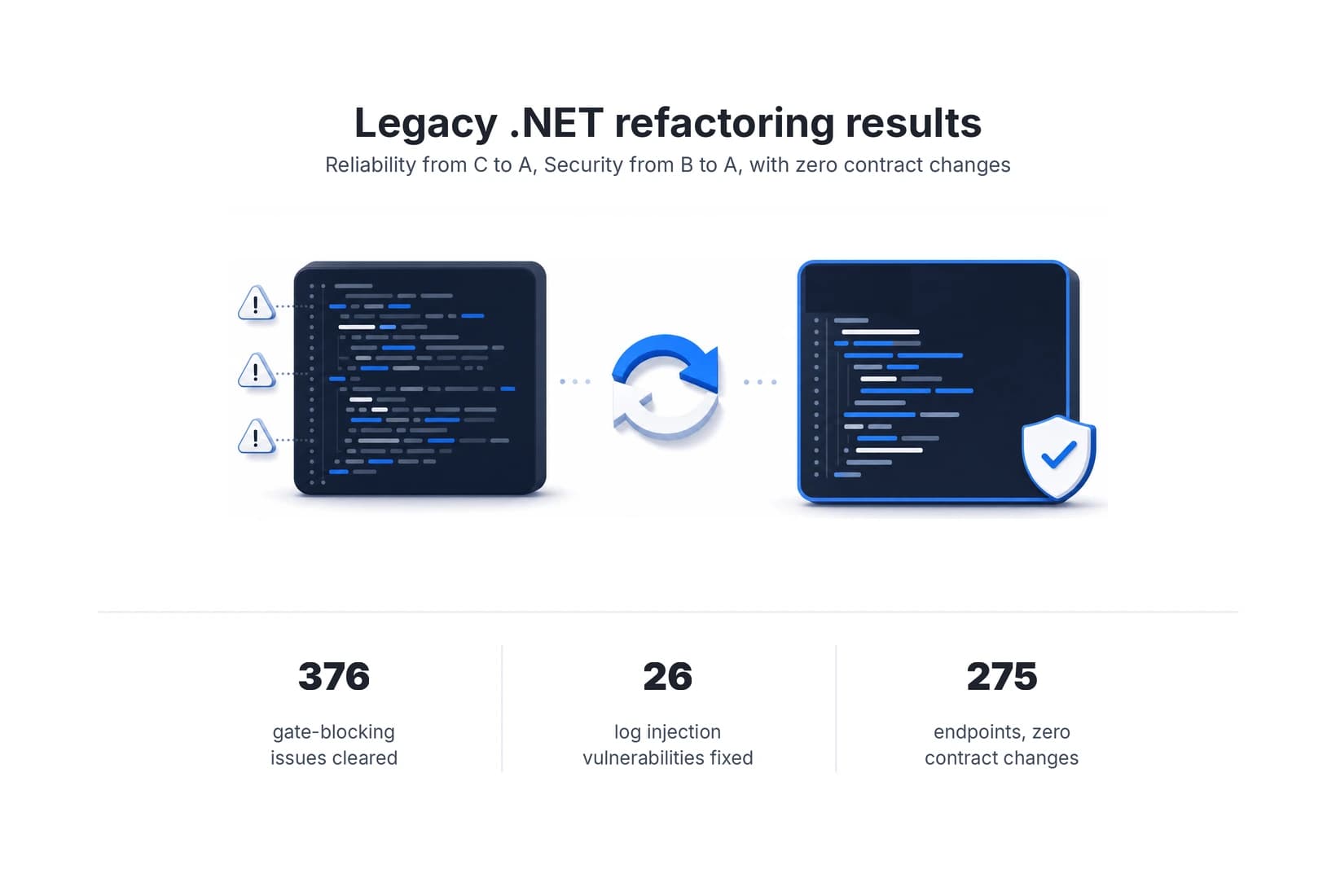
How AI-native development cleared a blocking SonarQube quality gate and 26 log injection vulnerabilities in a production .NET 8 API, with zero contract changes across all 275 endpoints.
 Articles
QA as a service vs in-house vs staff augmentation: how to choose
A build-vs-buy framework for choosing between QA as a service, in-house QA, and staff augmentation, plus a readiness score, red flags, and questions to ask before you commit.